 +44 28 3718 0055
About the Journal
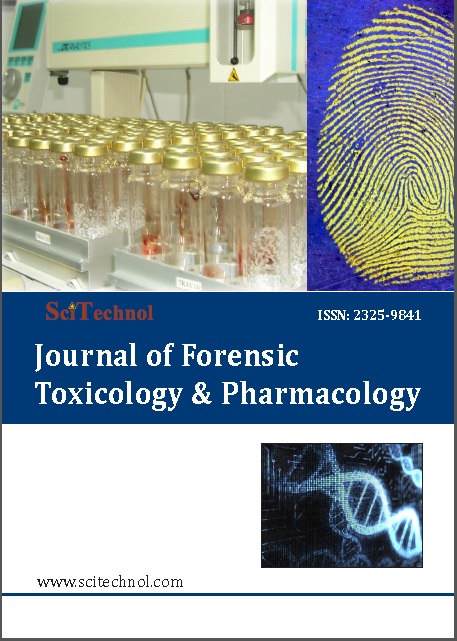
Journal of Forensic Toxicology and Pharmacology is a peer-reviewed scholarly journal and aims to publish the most complete and reliable source of information on the discoveries and current developments in the mode of original articles, review articles, case reports, short communications, etc. in all areas of forensic toxicology, forensic science and pharmacology and making them available online freely without any restrictions or any other subscriptions to researchers worldwide.
Journal of Forensic Toxicology and Pharmacology focuses mainly on topics that include:
- Forensic Science
- Forensic Pharmacology
- Forensic Toxicology
- Environmental Forensics
- Clinical Chemistry
- Forensic Death Investigation
- Clinical Pharmacology
- Drugs of abuse
- Forensic Anthropology
- Forensic Analytical Chemistry
- Drug Chemistry
The journal uses Editorial Manager System for quality in review process. Online Submission System is a mode of online manuscript submission, review and tracking system. Review processing is performed by the editorial board members of the journal or outside experts; at least two independent reviewer’s approval followed by editor approval is required for acceptance of any citable manuscript. Authors may submit manuscripts and track their progress through the system. Reviewers can download manuscripts and submit their opinions to the editor. Editors can manage the whole submission/review/revise/publish process.
Submit manuscripts at Online Submission System or send as an e-mail attachment to the Editorial Office at manuscript@scitechnol.com
Confirmed Special Issues:
1. Finger Prints - Past, Present and Future
2. Recent Trends in Forensic Science
Medical and Clinical Toxicology
Medical toxicology, is a medical subspecialty focusing on the diagnosis, management and prevention of poisoning and other adverse health effects due to medications, occupational and environmental toxicants, and biological agents. Medical toxicologists are involved in the assessment and treatment of acute or chronic poisoning, adverse drug reactions (ADR), overdoses, envenomations, and substance abuse, and other chemical exposures. Medical toxicology is officially recognized as a medical subspecialty by the American Board of Medical Specialties. Its practitioners are physicians, whose primary specialization is generally in emergency medicine, occupational medicine or pediatrics. Medical toxicology is closely related to clinical toxicology with the latter discipline encompassing non-physicians as well.
Journals Related to Medical and Clinical Toxicology: Clinical Toxicology, Therapeutics, Pharmacology and Clinical Toxicology,.Journal of Medical Toxicology, International Journal of Medical Toxicology and Legal Medicine, Journal of Toxicology - Clinical Toxicology, Journal of Pharmacology & Clinical Toxicology, The Journal of Medical Toxicology, Asia Pacific Journal of Medical Toxicology, World Journal of Clinical Pharmacology, Microbiology and Toxicology, International Journal of Clinical Toxicology.
Forensic Medicine
Forensic Medicine, the science that deals with the application of medical knowledge to legal questions. The use of medical testimony in law cases predates by more than 1,000 years the first systematic presentation of the subject by the Italian Fortunatus Fidelis in 1598. Forensic medicine was recognized as a specialty early in the 19th century. The primary tool of forensic medicine has always been the autopsy. Frequently used for identification of the dead, autopsies may also be conducted to determine the cause of death.
Journals Related to Forensic Medicine: American Journal of Forensic Medicine and Pathology, Journal of Forensic Medicine and Toxicology, Anil Aggrawal's Internet Journal of Forensic Medicine and Toxicology, Indian Journal of Forensic Medicine and Toxicology, Journal of Indian Academy of Forensic Medicine, Chinese Journal of Forensic Medicine, Journal of Punjab Academy of Forensic Medicine and Toxicology, Journal of Forensic and Legal Medicine, Journal of Clinical Forensic Medicine, International Journal of Medical Toxicology and Forensic Medicine.
Drug Chemistry
Forensic drug chemistry uses a series of processes performed in the field or laboratory to detect the presence or absence of controlled substances. Chemical analysis performed in the laboratory on submitted evidence detects and identifies illegal drugs, and helps law enforcement prosecute offenders. This practice uses a variety of chemical analysis methods to conduct both presumptive and confirmatory tests on seized material suspected to be or contain illegal substances. Results from this analysis often serve as the basis for criminal proceedings and help to determine sentencing for convicted offenders.
Journals Related to Drug Chemistry: Drugs, Drug Discovery Today, Expert Opinion on Investigational Drugs, Therapeutic Drug Monitoring, Drugs and Aging, Investigational New Drugs, Current Opinion in Investigational Drugs, Expert Opinion on Drug Metabolism and Toxicology, Expert Opinion on Orphan Drugs, Immunotoxicology of Drugs and Chemicals: an Experimental and Clinical Approach.
Environmental Forensics
Environmental forensics is the application of defensible scientific methods to address questions related to release histories and sources of contamination in the environment. Environmental forensics generally involves the reconstruction of past environmental events, such as the timing, types and amounts, and sources of chemical releases to the environment.
Journals Related to Environmental Forensics: Environmental Forensics, Environmental Forensics Journal, International Journal of Environmental Forensics, Journal of Environmental Monitoring, Archaeological and Environmental Forensic Science, Peertechz Journal of Forensic Science and Technology, International Journal of Forensic Science & Pathology, Environmental Toxicology and Pharmacology, Environmental Science & Technology.
Clinical Pharmacology
Clinical Pharmacology is underpinned by the basic science of pharmacology, with added focus on the application of pharmacological principles and methods in the real world. It has a broad scope, from the discovery of new target molecules, to the effects of drug usage in whole populations. Clinical Pharmacology, in theory, has been practiced for centuries through observing the effects of herbal remedies and early drugs on humans. Most of this work was done through trial and error. It connects the gap between medical practice and laboratory science. The main objective is to promote the safety of prescription, maximise the drug effects and minimise the side effects. It is important that there be association with pharmacists skilled in areas of drug information, medication safety and other aspects of pharmacy practice related to clinical pharmacology.
Journals Related to Clinical Pharmacology: Clinical Pharmacology and Therapeutics, British Journal of Clinical Pharmacology, Journal of Clinical Pharmacology, European Journal of Clinical Pharmacology, Basic and Clinical Pharmacology and Toxicology, International Journal of Clinical Pharmacology and Therapeutics, Fundamental and Clinical Pharmacology, Methods and Findings in Experimental and Clinical Pharmacology, British Journal of Clinical Pharmacology, Supplement, Canadian Journal of Clinical Pharmacology.
Forensic Dentistry
Forensic dentistry is the application of dental knowledge to those criminal and civil laws that are enforced by police agencies in a criminal justice system. Forensic dentists are involved in assisting investigative agencies to identify recovered human remains in addition to the identification of whole or fragmented bodies; forensic dentists may also be asked to assist in determining age, race, occupation, previous dental history and socioeconomic status of unidentified human beings. Identification is done by the comparison of ante-mortem and post-mortem dental records and using the unique features visible on dental radiograph.
Journals Related to Forensic Dentistry: Journal of Forensic Dental Sciences, The International journal of forensic dentistry, Journal of Forensic Dental Sciences, International journal of forensic odontology, Journal of Indo-Pacific Academy of Forensic Odontology, Forensic Anthropology and Forensic Dentistry, Journal of Forensic Odonto-Stomatology, Journal of Forensic Science & Criminology, Journal of Forensic and Legal Medicine, Master of Forensic Odontology
Computer Forensics
Computer forensics is the application of investigation and analysis techniques to gather and preserve evidence from a particular computing device in a way that is suitable for presentation in a court of law. The goal of computer forensics is to perform a structured investigation while maintaining a documented chain of evidence to find out exactly what happened on a computing device and who was responsible for it.
Journals Related to Computer Forensics: Journal of Digital Forensic Practice, Digital Investigation The International Journal of Digital Forensics & Incident Response, International Journal of Digital Evidence, Operating Systems Review, The Journal of Digital Forensics, Security and Law, Small Scale Digital Device Forensics Journal, International Journal of Electronic Security and Digital Forensics, Digital Evidence and Electronic Signature Law Review, Forensic Science Communications, Digital Investigation.
Forensic Pathology
Forensic pathology is a sub-specialty of pathology that focuses on determining the cause of death by examining a corpse. The autopsy is performed by a medical examiner, usually during the investigation of criminal law cases and civil law cases in some jurisdictions. Coroners and medical examiners are also frequently asked to confirm the identity of a corpse. Forensic pathology is an application of medical jurisprudence.
Journals Related to Forensic Pathology: The American Journal of Forensic Medicine and Pathology, Journal of Indian Academy of Forensic Medicine, International Journal of Forensic Science & Pathology, Academic Forensic Pathology, Toxicologic Pathology, Experimental and Toxicologic Pathology, Journal of Environmental Pathology, Toxicology and Oncology, Forensic Science, Medicine, and Pathology, The Forensic Panel, Journal of Clinical Forensic Medicine.
Fingerprints
A fingerprint in its narrow sense is an impression left by the friction ridges of a human finger. The recovery of fingerprints from a crime scene is an important method of forensic science. Fingerprints are easily deposited on suitable surfaces (such as glass or metal or polished stone) by the natural secretions of sweat from the eccrine glands that are present in epidermal ridges. In a wider use of the term, fingerprints are the traces of an impression from the friction ridges of any part of a human or other primate hand. A print from the sole of the foot can also leave an impression of friction ridges.
Journals Related to Fingerprints: Forensic Science International, Journal of Forensic Sciences, Forensic Science International: Genetics, Science and Justice - Journal of the Forensic Science Society, Forensic Science, Medicine, and Pathology, Forensic Science International: Genetics Supplement Series, Journal of the Canadian Society of Forensic Science, Australian Journal of Forensic Sciences, Forensic Science International Supplement Series, Forensic Science Review.
Forensic Death Investigation
Forensic Death Investigation provides first-hand exposure and experience, without actually being at the scene, in the lab, or beside the autopsy table. It begins with body examination and evidence collection at the scene and proceeds through history, physical examination, laboratory tests, and diagnosis – in short, the broad ingredients of a doctor’s treatment of a living patient. The key goal is to provide objective evidence of cause, timing, and manner of death for adjudication by the criminal justice system. Death investigation has been performed for centuries in all societies, although not always by medical professionals. The association of law and medicine dates back to the Egyptian culture as early as 3000 B.C. The English coroner system was mentioned in documentations around the 12th century B.C.
Journals Related to Forensic Death Investigation: Forensic Science International, Journal of Forensic Sciences, American Journal of Forensic Medicine and Pathology, Journal of Forensic Psychiatry and Psychology, Journal of Forensic and Legal Medicine, Journal of Forensic Neuropsychology, Forensic Science, Medicine, and Pathology, Journal of Forensic Identification, Journal of Forensic Odonto-Stomatology, Forensic Science International: Genetics Supplement Series.
Drugs of Abuse
Drug abuse, also called substance abuse or chemical abuse, is a disorder that is characterized by a destructive pattern of using a substance that leads to significant problems or distress. Teens are increasingly engaging in prescription drug abuse, particularly narcotics, and stimulant medications, which treat conditions like attention deficit disorder and narcolepsy.
Journals Related to Drug Abuse: Journal of drug abuse, Journal of Drug issues, Drug and Alcohol Dependence, The American Journal of Drug and Alcohol Abuse, Journal of Substance Abuse Treatment.
Forensic Genetics
Forensic genetics is the branch of genetics that deals with the application of genetic knowledge to legal problems and legal proceedings. Forensic genetics is also a branch of forensic medicine which deals more broadly with the application of medical knowledge to legal matters. Forensic genetics today tends to conjure up DNA. However, even the term "DNA fingerprinting" is reminiscent of older methods of police identification. Forensic genetics is not a new field. Long before the era of DNA fingerprinting, blood grouping, HLA typing and other tests of genetic markers in blood were done to try to determine who did it and more often, who did not do it.
Journals Related to Forensic Genetics: Forensic Science International: Genetics, Current Trends in Forensic Genetics, Critical review of forensic trace evidence analysis and the need for a new approach, Forensic Science International: Genetics Supplement Series, BioScience, Forensic Science International: Genetics, The Lancet, The Journal of Danish Society of Forensic Medicine
Digital Forensics
Digital forensics is a new and growing field in the area of hi-tech crime investigation. It is the process of uncovering and interpreting electronic data. The goal of the process is to preserve any evidence in its most original form while performing a structured investigation by collecting, identifying and validating the digital information for the purpose of reconstructing past events. The context is most often for usage of data in a court of law, though digital forensics can be used in other instances.
Journals Related to Digital Forensics: International Journal of Digital Crime and Forensics, International Journal of Digital Evidence, International Journal of Forensic Computer Science, Journal of Digital Forensic Practice, Journal of Digital Forensics, Security and Law, Journal of Forensic Sciences, Microgram, Transactions on Information Forensics and Security, Digital Evidence and Electronic Signature Law Review, Digital Investigation.
Forensic Neuropsychology
The field of forensic neuropsychology is quite new and is rapidly evolving. Forensic Neuropsychology is a subspecialty of clinical neuropsychology that directly applies neuropsychological principles and practices to matters that pertain to legal decision-making. Practitioners of forensic neuropsychology are trained as clinical neuropsychologists and subsequently specialize in the forensic application of their knowledge and skills. At present time, no formal training programs, licensure requirements, or professional organizations devoted specifically to forensic neuropsychology.
Journals Related to Forensic Neuropsychology: Journal of Forensic Psychiatry and Psychology, American Journal of Forensic Psychiatry, International Journal of Forensic Mental Health, Journal of Forensic Psychiatry, International Journal of Law and Psychiatry, Forensic Psychiatry, PsycCRITIQUES, Journal of Forensic Psychology Practice, American Journal of Psychiatry, British Journal of Psychiatry.
Forensic Criminology
Forensic Criminology is the scientific study of crime and criminals for the purpose of addressing investigative and legal questions. Forensic criminology is a behavioural and forensic science. Forensic criminology is characterized by an integration of material from many sub-disciplines including forensic science, criminal investigation, criminalistics, forensic psychology, victimology, crime reconstruction, criminal profiling, and more. A key distinguishing feature of a forensic criminologist, compared to other criminologists, is the expectation that his opinions and findings will be used in the context of an investigative format or submitted in a legal proceeding.
Journals Related to Forensic Criminology: Forensic Science and Criminology, Journal of Forensic Science & Criminology, Journal of Criminal Law & Criminology, British Journal of Criminology, European Journal of Criminology, Criminology & Criminal Justice,Asian Journal of Criminology, Australian and New Zealand Journal of Criminology.
Forensic Analytical Chemistry
Forensic Analytical chemistry is the study of the separation, identification, and quantification of the chemical components of natural and artificial materials. Qualitative analysis gives an indication of the identity of the chemical species in the sample, and quantitative analysis determines the amount of certain components in the substance. The separation of components is often performed prior to analysis. Separation techniques such as precipitation, extraction, and distillation and qualitative analysis by color, odor, or melting point, chromatography, electrophoresis or field flow fractionation comes under analytical chemistry. Analytical chemistry also focuses on improving experimental designs, chemometrics, and the creation of new measurement tools to provide better chemical information. Analytical chemistry has applications in forensics, bioanalysis, clinical analysis, environmental analysis, and materials analysis.
Journals Related to Forensic analytical chemistry: Analytical and Bioanalytical Chemistry, Analytical Biochemistry, Annals of Clinical Biochemistry, Bulletin of Environmental Contamination and Toxicology, Clinical Biochemistry, Clinical Chemistry and Laboratory Medicine, Forensic Science International, Journal of Analytical Toxicology, Journal of Forensic Sciences, Journal of Pharmaceutical and Biomedical Analysis
Forensic Pharmacology
Forensic toxicologists practice the science of the detection of drugs and poisons in samples, and study the significance of these results in relation to forensic cases. Their training is grounded in chemistry and applied analytical techniques to meet the needs of their science. Pharmacologists study the effect of drugs on living systems and when applied to forensic cases the term “forensic pharmacology” can be used.
Journals Related to Pharmacology: Indian Journal of Forensic Medicine and Toxicology, Environmental Toxicology and Pharmacology, International Immunopharmacology, Comparative Biochemistry and Physiology - Part C: Toxicology & Pharmacology, British Journal of Clinical Pharmacology, Journal of Pharmaceutical and Biomedical Analysis, Chinese Journal of Pharmaceutical Analysis, Journal of Forensic Dental Sciences, Journal of Pharmacology and Toxicological Studies, Journal of Pharmacology & Clinical Toxicology
Clinical Chemistry
Clinical chemistry (also known as clinical biochemistry or chemical pathology) is the study of chemical and biochemical mechanisms of the body in relation to disease, mostly through the analysis of body fluids such as blood or urine. In many diseases there are significant changes in the chemical composition of body fluids such as the raised blood enzymes due to their release from heart muscles after a heart attack; or a raised blood sugar in diabetes mellitus due to lack of insulin. Tests are designed to detect these changes qualitatively or quantitatively compared to results from healthy people. Clinical chemists use a wide range of analytical techniques for example, molecular diagnostics, measurement of enzyme activities, spectrophotometry, electrophoresis, the separation of molecules based on physical characteristics and immunoassays.
Journals Related to Clinical Chemistry: Journal of Pharmacology & Clinical Toxicology, Annals of Clinical Biochemistry, Clinical Biochemistry, Clinical Chemistry and Laboratory Medicine, Journal of Clinical Laboratory Analysis, Proteomics - Clinical Applications, Clinical Chemistry, Critical Reviews in Clinical Laboratory Sciences, Clinical Proteomics, European Journal of Clinical Investigation
Forensic Science
The word forensic comes from the Latin word forensis: public, to the forum or public discussion; argumentative, rhetorical, belonging to debate or discussion. A relevant, modern definition of forensic is: relating to, used in, or suitable to a court of law. Any science used for the purposes of the law is a forensic science. The forensic sciences are used around the world to resolve civil disputes, to justly enforce criminal laws and government regulations, and to protect public health.
Journals Related to Forensic Science: Forensic Science International, Journal of Forensic Sciences, Forensic Science International: Genetics, Science and Justice - Journal of the Forensic Science Society, Forensic Science, Medicine, and Pathology, Forensic Science International: Genetics Supplement Series, Journal of the Canadian Society of Forensic Science, Australian Journal of Forensic Sciences, Forensic Science International Supplement Series, Forensic Science Review
Forensic Toxicology
Toxicology is the study of the adverse effects of drugs and chemicals on biological systems. Forensic toxicology deals with the application of toxicology to cases and issues where those adverse effects have administrative or medicoâ€legal consequences, and where the results are likely to be used in court. Forensic toxicology is a thoroughly modern science, based on published and widely accepted scientific methods and practices, for both analysis of drugs in biological materials, and interpretation of those results.
Journals Related to Forensic Toxicology: Forensic Toxicology, Journal of Analytical Toxicology, Bulletin of Environmental Contamination and Toxicology, Toxicology and Applied Pharmacology, Environmental Toxicology and Chemistry Toxicology, Journal of Analytical Toxicology, Journal of Applied Toxicology, Environmental Toxicology and Pharmacology, Bulletin of Environmental Contamination and Toxicology.
*2017 official journal impact factor is the ratio of the number of citations achieved in the year 2017 based on Google search and Google scholar citations to the total number of articles published in the last two years i.e. in 2015 and 2016. Impact factor measures the quality of the Journal.
If ‘X’ is the total number of articles published in 2015 and 2016, and ‘Y’ is the number of times these articles were cited in indexed journals during 2017 then, impact factor = Y/X.
Fast Editorial Execution and Review Process (FEE-Review Process):
Journal of Forensic Toxicology & Pharmacology is participating in the Fast Editorial Execution and Review Process (FEE-Review Process) with an additional prepayment of $99 apart from the regular article processing fee. Fast Editorial Execution and Review Process is a special service for the article that enables it to get a faster response in the pre-review stage from the handling editor as well as a review from the reviewer. An author can get a faster response of pre-review maximum in 3 days since submission, and a review process by the reviewer maximum in 5 days, followed by revision/publication in 2 days. If the article gets notified for revision by the handling editor, then it will take another 5 days for external review by the previous reviewer or alternative reviewer.
Acceptance of manuscripts is driven entirely by handling editorial team considerations and independent peer-review, ensuring the highest standards are maintained no matter the route to regular peer-reviewed publication or a fast editorial review process. The handling editor and the article contributor are responsible for adhering to scientific standards. The article FEE-Review process of $99 will not be refunded even if the article is rejected or withdrawn for publication.
The corresponding author or institution/organization is responsible for making the manuscript FEE-Review Process payment. The additional FEE-Review Process payment covers the fast review processing and quick editorial decisions, and regular article publication covers the preparation in various formats for online publication, securing full-text inclusion in a number of permanent archives like HTML, XML, and PDF, and feeding to different indexing agencies.